


Dog Joint Anatomy: How Cartilage & Fluid Work
TL;DR
- Your dog’s ability to walk comfortably, stretch after a nap, or leap into play all depends on one quietly complex system working behind the scenes: their joints.
- A joint is the point where two bones meet.
- Dog joints rely on several components working together.
- Joint health affects far more than high-energy activities.
Understanding dog joint anatomy is the key to knowing how your pet moves, plays, and stays comfortable throughout their life. Your dog's ability to walk comfortably, stretch after a nap, or leap into play all depends on this quietly complex system working behind the scenes.
While joint health is often associated with senior dogs, the truth is that joints play a role in comfort, confidence, and mobility throughout a dog’s entire life. Understanding how dog joints work — and what supports them over time — allows pet parents to make informed, proactive decisions long before stiffness or discomfort becomes noticeable.
This guide breaks down dog joint anatomy in simple terms, explains how smooth movement is maintained, and explores why joint care is best approached as long-term support rather than a reaction to visible problems.
What Is a Joint, Exactly?
A joint is the point where two bones meet. Its role is deceptively simple: allow movement while absorbing impact.
Everyday activities like walking, running, sitting, or jumping place repeated stress on your dog’s joints. Healthy joints are designed to cushion that stress, maintain proper alignment, and allow fluid, controlled motion — all without drawing attention to themselves.
When joints are functioning well, dogs move freely and naturally. When the system begins to wear down, movement can slowly become less smooth and more effortful.
The Key Parts of a Dog’s Joint (And What They Do)
Dog joints rely on several components working together. Each plays a specific role in protecting movement and reducing wear.

Cartilage: The Cushion Between Bones
Cartilage is a smooth, resilient tissue that covers the ends of bones inside a joint. It helps:
-
Prevent bones from rubbing against each other
-
Absorb shock during movement
-
Support smooth, friction-free motion
Unlike muscle or skin, cartilage has a limited ability to repair itself once damaged. Veterinary references note that cartilage degeneration is often progressive and difficult to reverse once it begins, which is why joint wear tends to worsen gradually over time rather than suddenly.
Source: VCA Hospitals – Degenerative Joint Disease in Dogs
Many dogs experience subtle cartilage changes long before obvious signs like limping or stiffness appear.
Synovial Fluid: The Joint’s Natural Lubrication
Synovial fluid is a thick, slippery liquid contained within the joint capsule. It functions much like oil in a hinge.
Its roles include:
-
Reducing friction during movement
-
Delivering nutrients to cartilage
-
Supporting shock absorption
Veterinary anatomy resources emphasize that healthy synovial fluid is essential for smooth joint motion and cartilage nourishment, especially with regular, low-impact movement.
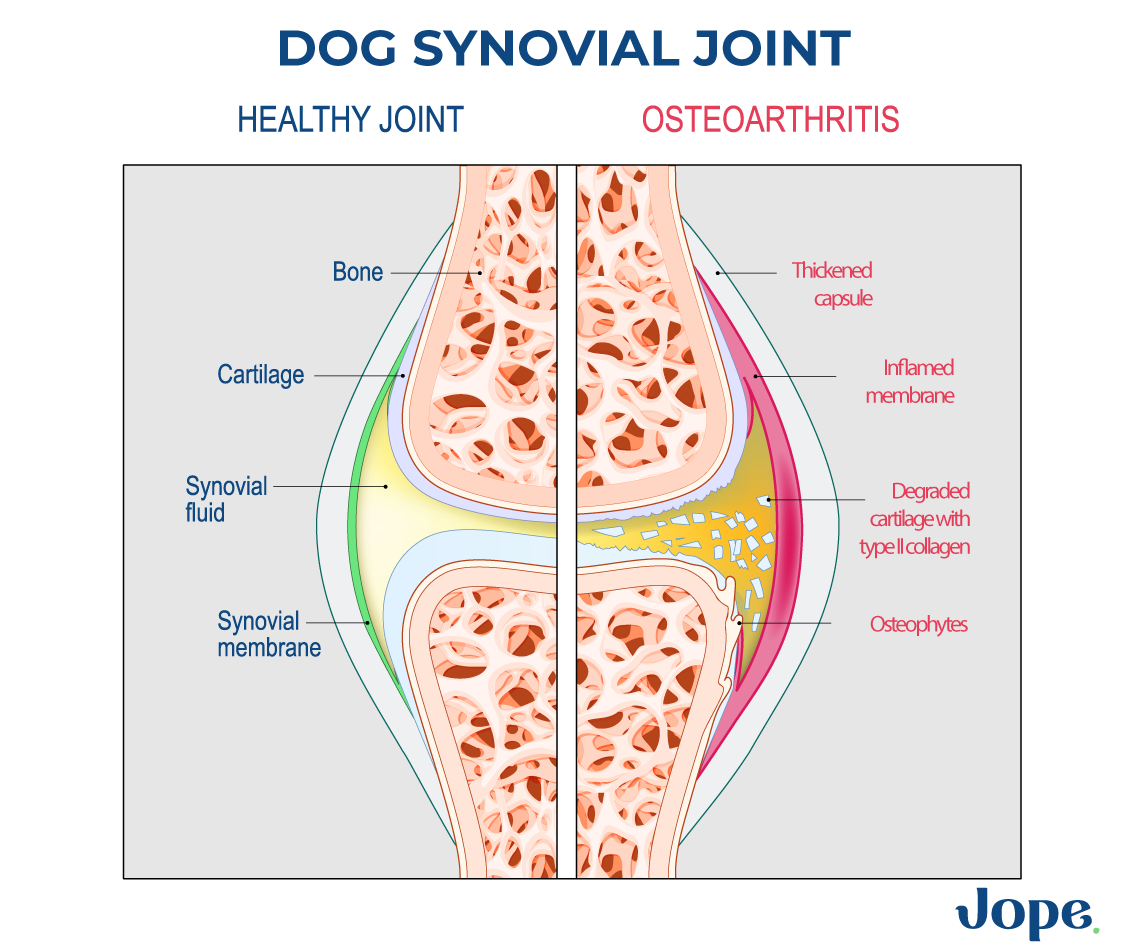
Source: CVCA Hospitals – Joint Fluid (Synovial Fluid) in Pets
When lubrication becomes less effective, joints may experience increased friction with everyday activity.
Ligaments and Tendons: Stability and Support
Ligaments connect bone to bone, while tendons connect muscle to bone. Together, they:
-
Maintain joint alignment
-
Prevent excessive or unstable motion
-
Support balance, strength, and coordination
Strong connective tissues help protect joints from abnormal movement patterns that can accelerate wear.
How Joint Movement Supports Everyday Mobility
Joint health affects far more than high-energy activities. It influences nearly every aspect of your dog’s daily routine, including:
-
Standing up and lying down
-
Climbing stairs
-
Walking on uneven ground
-
Turning, stretching, and playing
When joints move smoothly, dogs don’t need to compensate or hesitate. Movement feels natural — and that ease of motion is a key indicator of long-term comfort.
What Happens to Dog Joints Over Time?
Joint wear is cumulative. Small amounts of stress add up gradually over years of normal activity.
Factors that influence joint changes include:
-
Natural aging
-
Breed and body size
-
Activity level
-
Body weight
-
Past injuries or repetitive strain
Veterinary research shows that degenerative joint changes often begin before visible symptoms appear, as dogs instinctively adapt their movement to avoid discomfort.
 Source: Cornell College of Veterinary Medicine — Osteoarthritis in Dogs
By the time stiffness, hesitation, or limping becomes obvious, joints may have already experienced meaningful wear.
Why Joint Issues Aren’t Always Obvious at First
Dogs are remarkably resilient. When something feels slightly off, many dogs compensate quietly rather than signaling pain.
Early joint stress may appear as:
-
Slower movement after resting
-
Hesitation before jumping or climbing
-
Shorter or less enthusiastic play sessions
-
Subtle posture or gait changes
These signs are easy to overlook — especially in dogs that remain active and alert. Understanding how joints work helps pet parents recognize why these small shifts matter.
Can You Support Joint Health Before Problems Start?
Yes — and many veterinarians now encourage a proactive approach to joint care.
Supporting joint health early focuses on preserving function, not treating pain. Key pillars include:
-
Consistent, low-impact movement
-
Healthy weight management
-
Balanced nutrition
-
Daily joint support designed for long-term use
The goal isn’t to change how your dog moves today — it’s to help protect how they’ll move years from now.
As we like to say at Sir Archer’s:
Supporting joints early is about preserving mobility, not fixing pain.
Supportive Rest Matters, Too
Joint health isn’t influenced by movement alone — rest and recovery play an important role as well.
When dogs rest on surfaces that don’t adequately support their body weight, pressure can concentrate around the hips, shoulders, and elbows. Over time, this added strain may affect comfort, particularly for larger dogs, active dogs, or those beginning to experience joint wear.
Providing a supportive sleep surface can help:
-
Distribute weight more evenly
-
Reduce pressure on joints during rest
-
Support proper alignment while sleeping
That’s why we designed the Sir Archer’s Everyday Bed with supportive materials intended to help cushion joints and promote comfortable, restorative rest as part of a daily routine.
A bed alone won’t prevent joint changes — but creating a joint-friendly environment that includes movement, nutrition, and supportive rest plays an important role in long-term mobility and comfort.
👉 Learn more about the Everyday Bed
Understanding Joint Health Helps You Make Better Choices
When you understand how cartilage, synovial fluid, and connective tissues work together, joint care stops feeling reactive or confusing.
It becomes intentional.
Whether your dog is young, fully grown, or entering their senior years, joint health plays a role in comfort, confidence, and quality of life. Small, thoughtful decisions made consistently tend to matter far more than last-minute interventions.
For pet parents looking to incorporate daily internal support alongside lifestyle and environment, Sir Archer’s also offers Everyday Joint Health Chews, designed to support cartilage and mobility with consistent use.
Coming Next
In our next post, we’ll explore early signs of joint stress — often before stiffness or limping becomes obvious — and what pet parents can do at the first signs of change.
Key Takeaways
- A joint is the point where two bones meet.
- Dog joints rely on several components working together.
- Joint health affects far more than high-energy activities.
- Joint wear is cumulative.
- Dogs are remarkably resilient.
- Yes — and many veterinarians now encourage a proactive approach to joint care.
Sources & References
Frequently Asked Questions
What Is a Joint, Exactly?
A joint is the point where two bones meet. Its role is deceptively simple: allow movement while absorbing impact.
What should you know about the key parts of a dog’s joint (and what they do)?
Dog joints rely on several components working together. Each plays a specific role in protecting movement and reducing wear.
What should you know about cartilage: the cushion between bones?
Cartilage is a smooth, resilient tissue that covers the ends of bones inside a joint.
What should you know about synovial fluid: the joint’s natural lubrication?
Synovial fluid is a thick, slippery liquid contained within the joint capsule. It functions much like oil in a hinge.
What should you know about ligaments and tendons: stability and support?
Ligaments connect bone to bone, while tendons connect muscle to bone. Together, they:
How Joint Movement Supports Everyday Mobility?
Joint health affects far more than high-energy activities. It influences nearly every aspect of your dog’s daily routine, including: